Splunk BOTSv1: A Defender's Walkthrough

Splunk's Boss of the SOC v1 (BOTSv1) is a blue team CTF built around a fictional intrusion at Wayne Enterprises. Splunk has released this dataset publicly allowing anyone with a Splunk instance to work through it locally. This is why it's become one of the recommended free CTFs for those moving into the SOC or IR work.
Scenario 1 - Web site defacement
Today is Alice's first day at the Wayne Enterprises' Security Operations Center. Lucius sits Alice down and gives her first assignment: A memo from Gotham City Police Department (GCPD). Apparently GCPD has found evidence online http://pastebin.com/Gw6dWjS9 that the website www.imreallynotbatman.com hosted on Wayne Enterprises' IP address space has been compromised. The group has multiple objectives... but a key aspect of their modus operandi is to deface websites in order to embarrass their victim. Lucius has asked Alice to determine if www.imreallynotbatman.com. (the personal blog of Wayne Corporations CEO) was really compromised.
Pre Work:
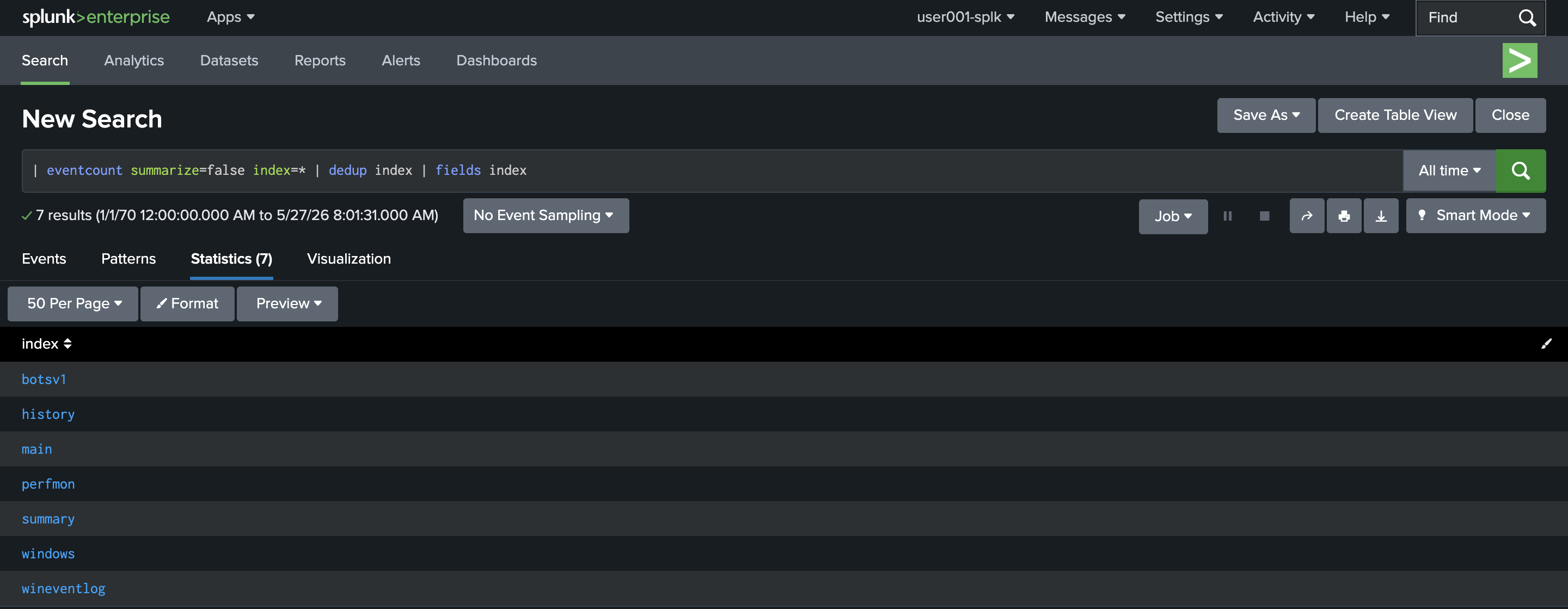
I started by looking at all the available indices:
| eventcount summarize=false index=* | dedup index | fields index
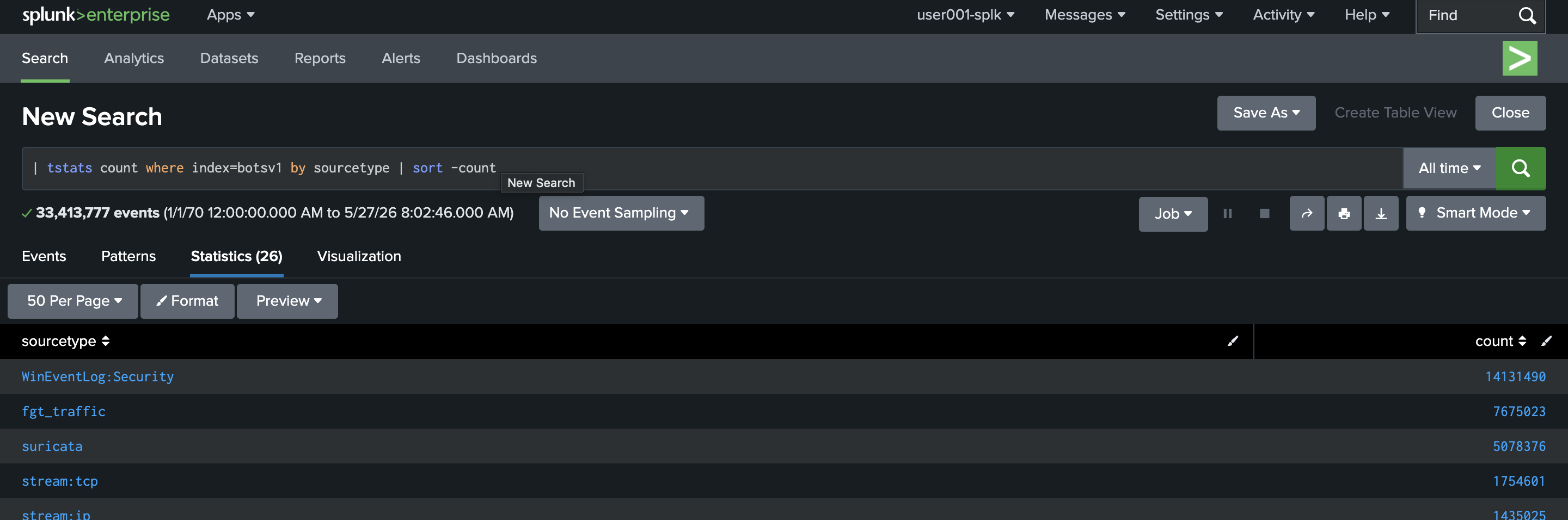
Then I viewed the source types under the first index:
| tstats count where index=botsv1 by sourcetype | sort -count
Question 101: What is the likely IPv4 address of someone from the Po1s0n1vy group scanning imreallynotbatman.com for web application vulnerabilities?
Picking the relevant index and source type, I searched for the top source IPs and user agents that made HTTP requests:
index=botsv1 sourcetype=stream:http site=imreallynotbatman.com
| top src_ip, http_user_agent
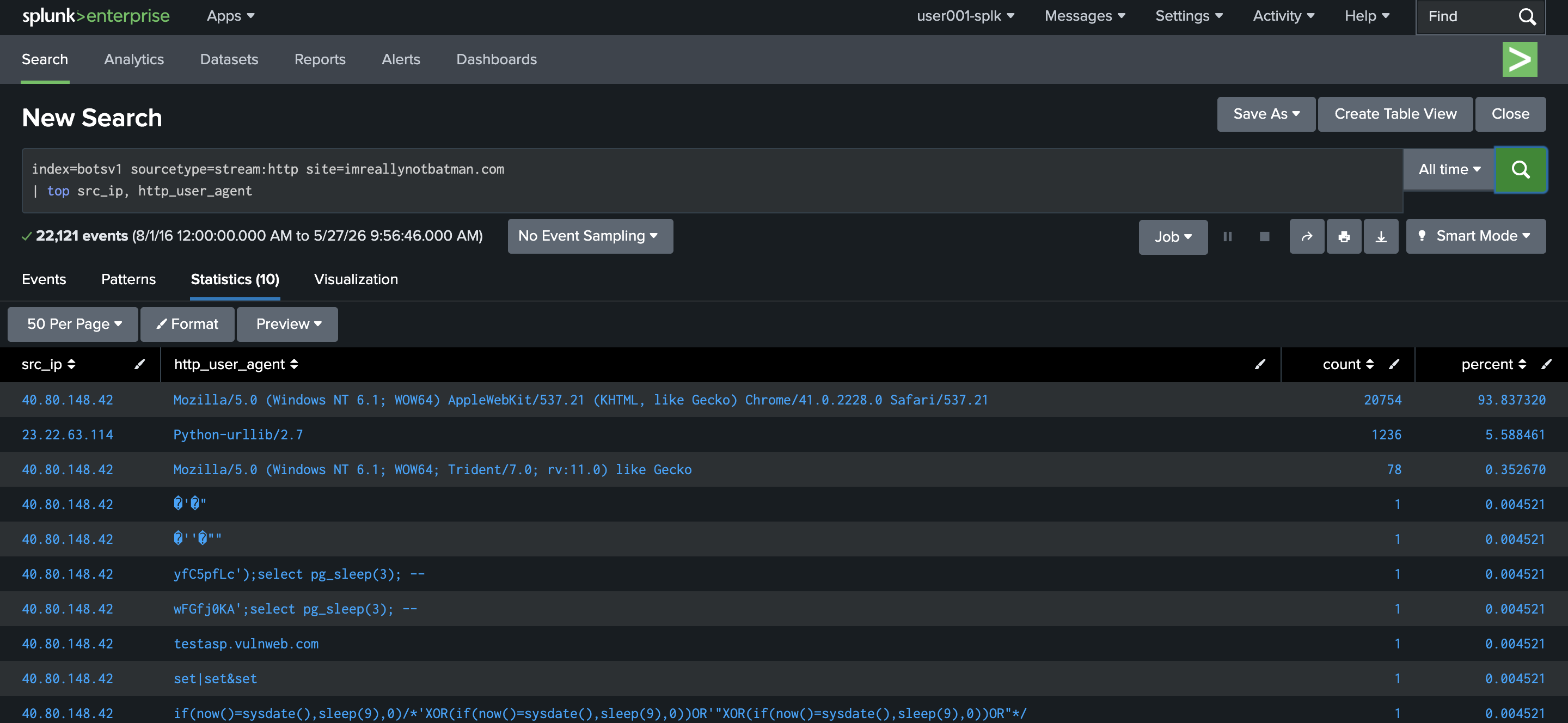
There where only 2 source IPs displayed. 40.80.148.42 was the clear web vulnerability scanner as it was modifying the user agent in attempts to exploit web vulnerabilities. Real users don't rotate user agents though automated vulnerability scanning tooling often does. That a single source (src_ip) generated multiple distinct UAs (http_user_agent) in a single burst, which is not legitimate behaviour for a web browser.
Answer: 40.80.148.42
Question 102: What company created the web vulnerability scanner used by Po1s0n1vy? Type the company name.
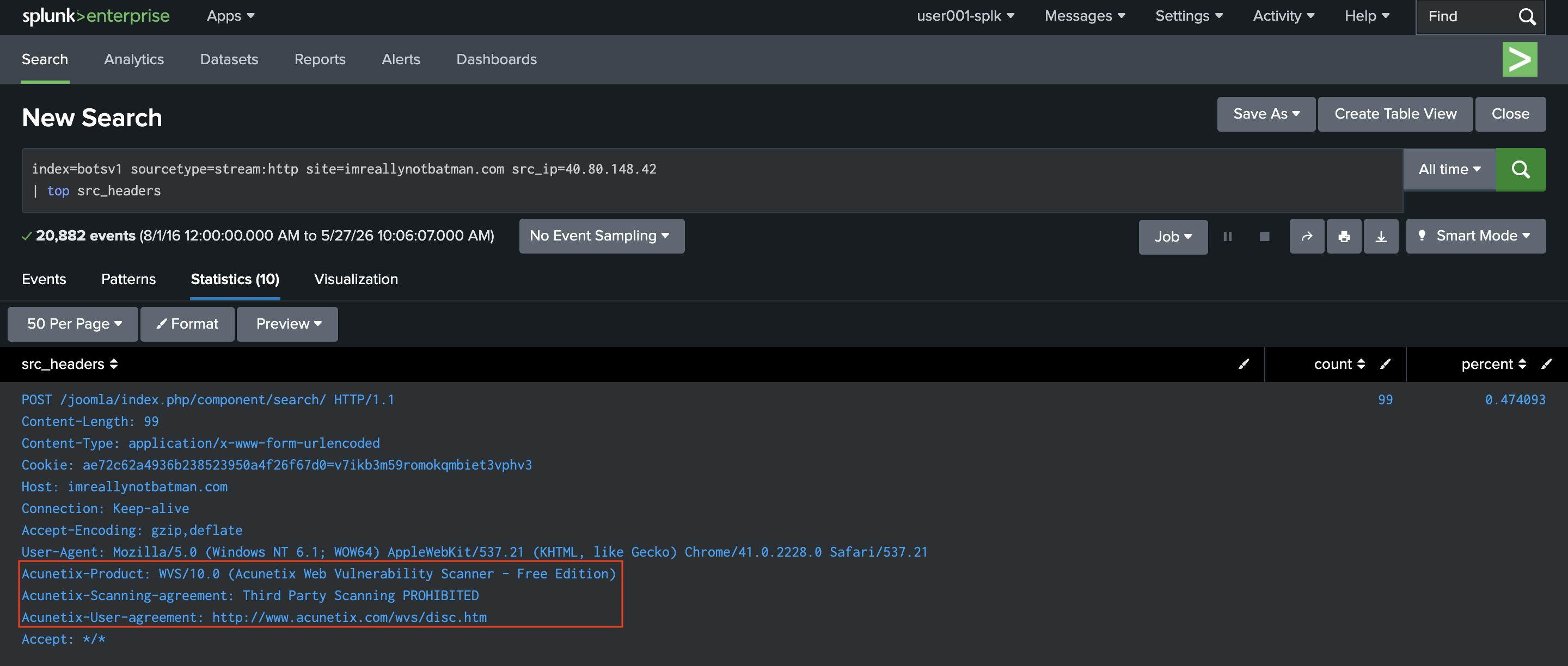
Since the user agent in my previous search didn't provide an answer to this question, I looked at all the HTTP headers for the web app scanner against the site:
index=botsv1 sourcetype=stream:http site=imreallynotbatman.com src_ip=40.80.148.42
| top src_headers
Answer: Acunetix
Question 103: What content management system is imreallynotbatman.com likely using?
The answer to this question was in my screenshot above, though I wanted to make sure the request was successful and not just part of a wordlist used by the scanner.
index=botsv1 sourcetype=stream:http site=imreallynotbatman.com status=200
| top src_headers
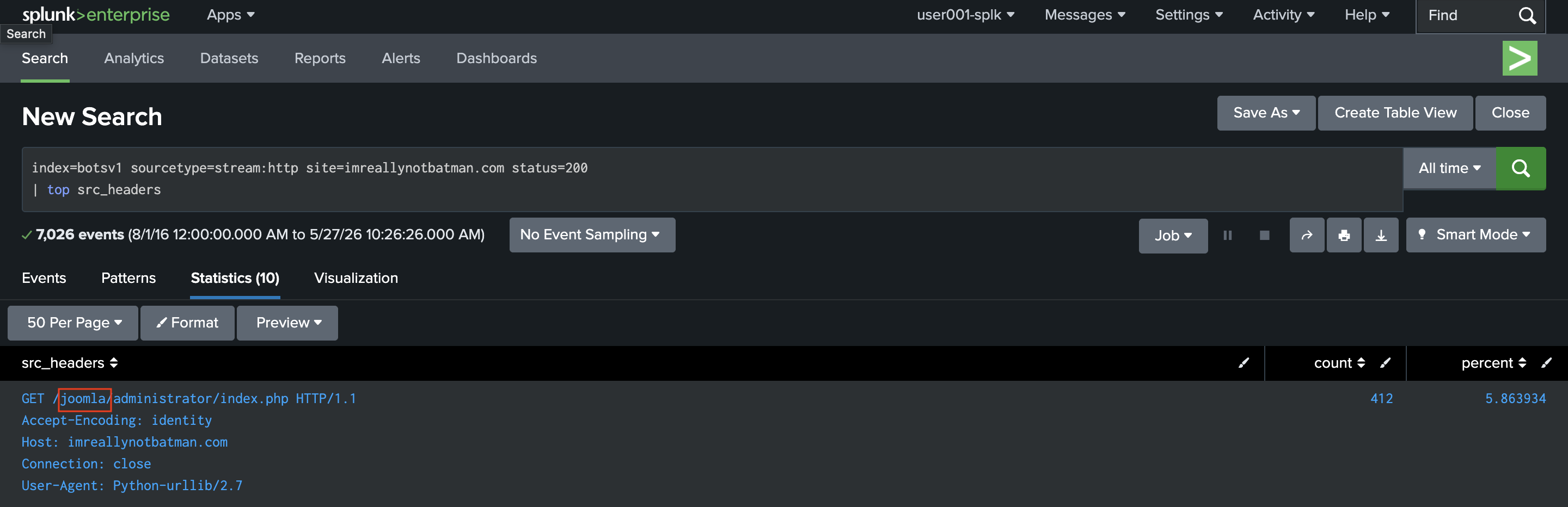
Answer: Joomla
Question 104: What is the name of the file that defaced the imreallynotbatman.com website? Please submit only the name of the file with extension?
I was not having much luck with finding the file with stream:http, so I switched to sourcetype=* to cover any other sources. Some of these sources required an IP rather than the site name that I was using before. So I wanted to find the source IP of the web server:
index=botsv1 sourcetype=stream:http site=imreallynotbatman.com status=200
| top dest_ip
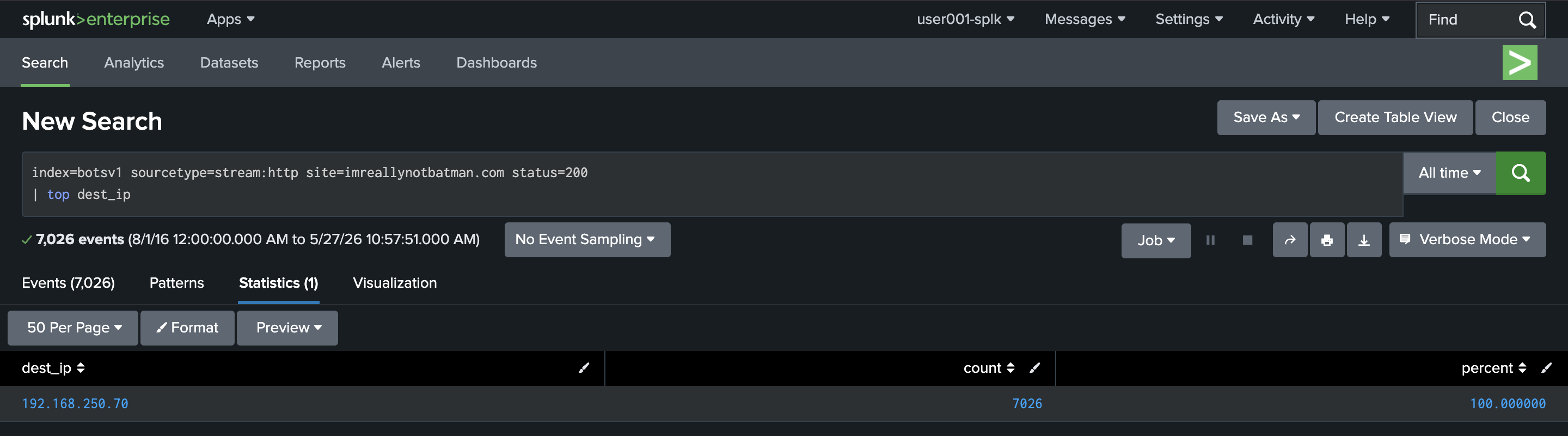
Knowing the IP address of the web server (192.168.250.70), I took a look at the different content type requests, where the status code was 200:
index=botsv1 sourcetype=* status=200 (src_ip=192.168.250.70 OR dest_ip=192.168.250.70)
| stats count by http_content_type
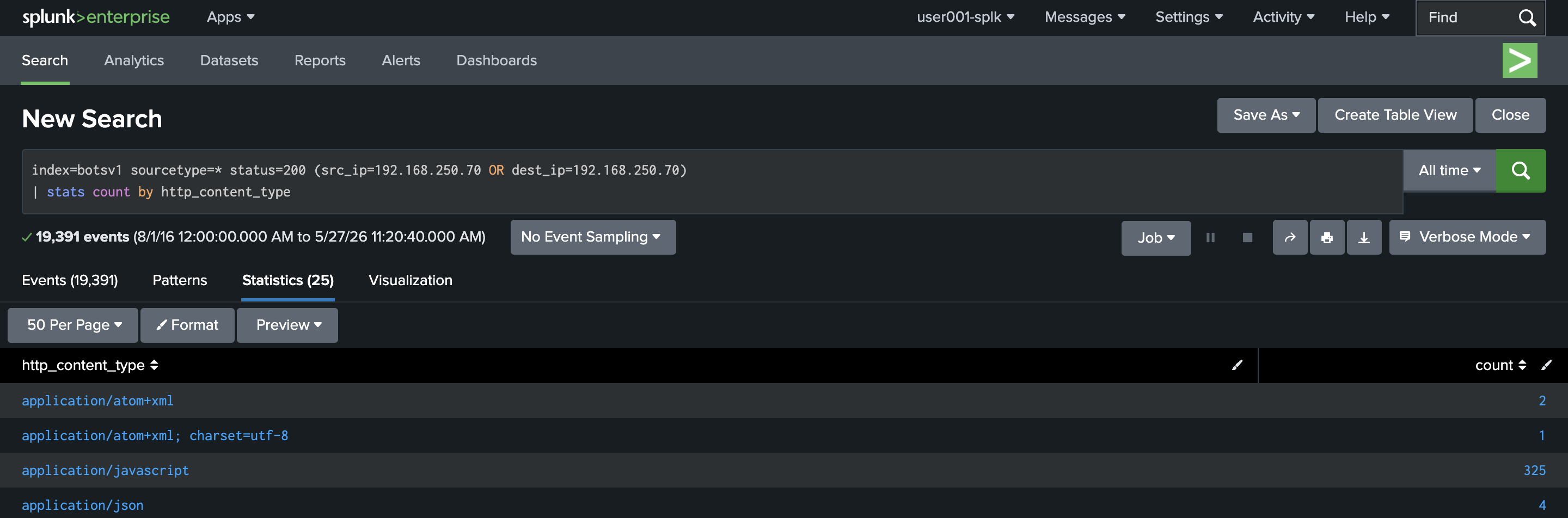
There where only 25 different content types, so I picked some of the ones that were not used too often, and could also be used for defacement. There where only 54 results, so I scanned through the list until I find a suspicious file (poisonivy-is-coming-for-you-batman.jpeg), which was the answer on only line 2:
index=botsv1 sourcetype=* status=200 (src_ip=192.168.250.70 OR dest_ip=192.168.250.70) http_content_type IN ("image/jpeg", "image/png", "image/gif")
| dedup url
| table url
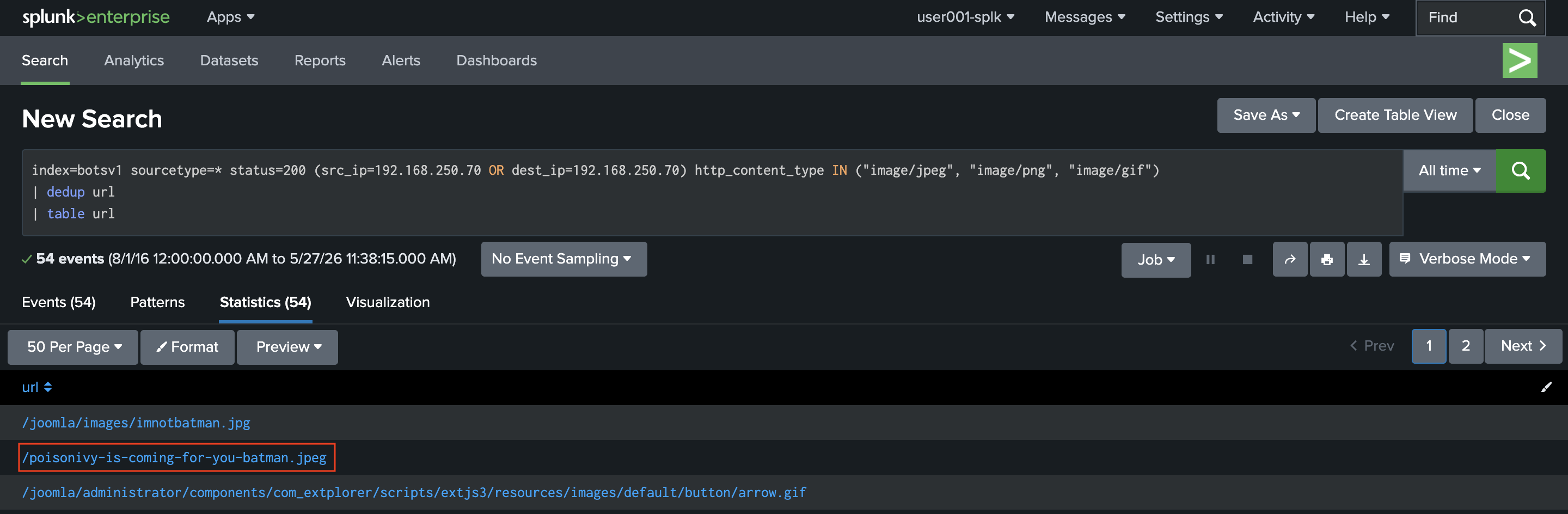
Answer: poisonivy-is-coming-for-you-batman.jpeg
Question 105: This attack used dynamic DNS to resolve to the malicious IP. What fully qualified domain name (FQDN) is associated with this attack?
I already had the URL from question 104, so I just need to find the FQDN which hosted it:
index=botsv1 status=200 (src_ip=192.168.250.70 OR dest_ip=192.168.250.70) http_content_type url="/poisonivy-is-coming-for-you-batman.jpeg"
| stats count by http.hostname
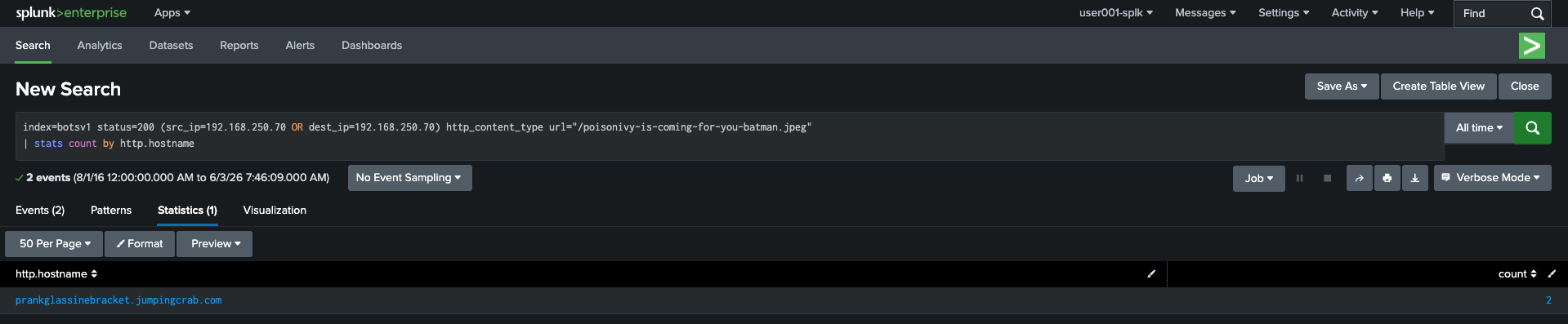
Answer: prankglassinebracket.jumpingcrab.com
Question 106: What IPv4 address has Po1s0n1vy tied to domains that are pre-staged to attack Wayne Enterprises?
A quick search for the domain (found in question 105) on VirusTotal shows that they have captured the domain as resolving to 23.22.63.114 on 2018-05-02:
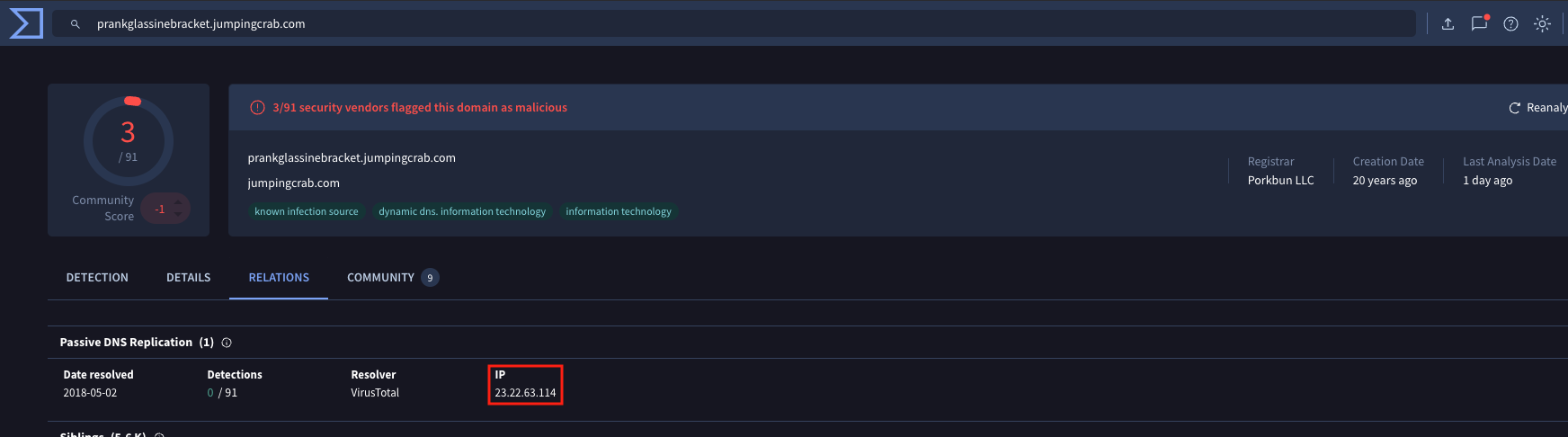
Answer: 23.22.63.114
Question 107: This question did not exist.
Question 108: What IPv4 address is likely attempting a brute force password attack against imreallynotbatman.com?
I already know the destination IP (Question 104) and that the target is a webserver. Looking at the most hit urls and their source IP, the answer is found by looking at the most likely path to an authentication page:
index=botsv1 sourcetype=stream:http dest_ip=192.168.250.70 status!=404
| stats count by url, src_ip
| sort -count
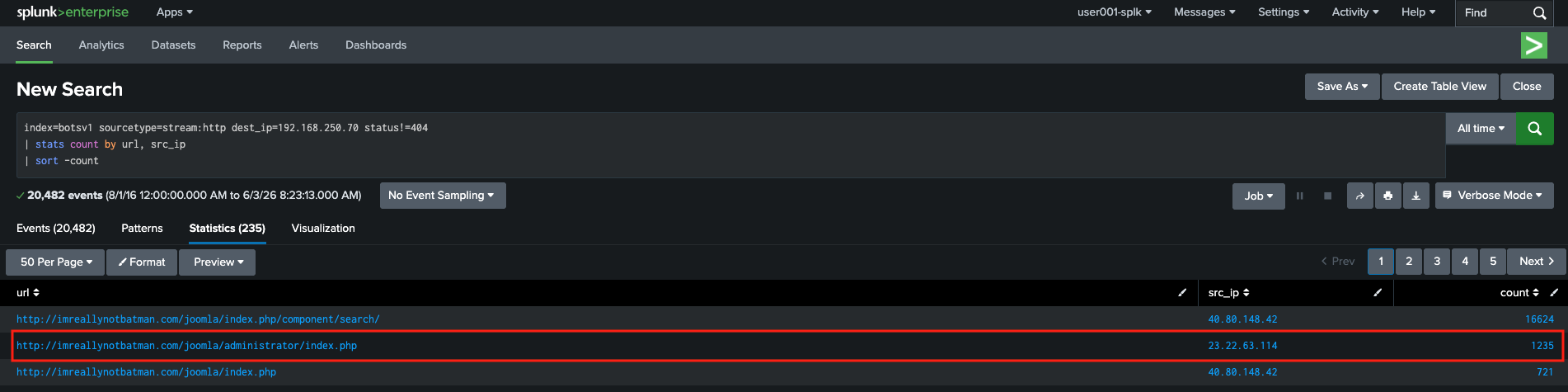
Answer: 23.22.63.114
Question 109: What is the name of the executable uploaded by Po1s0n1vy?
Since told it was uploaded, the destination IP will be the webserver, method POST (first assumption) and then can take a look at the filenames:
index=botsv1 sourcetype=stream:http dest_ip=192.168.250.70 http_method=POST
| stats count by part_filename{}
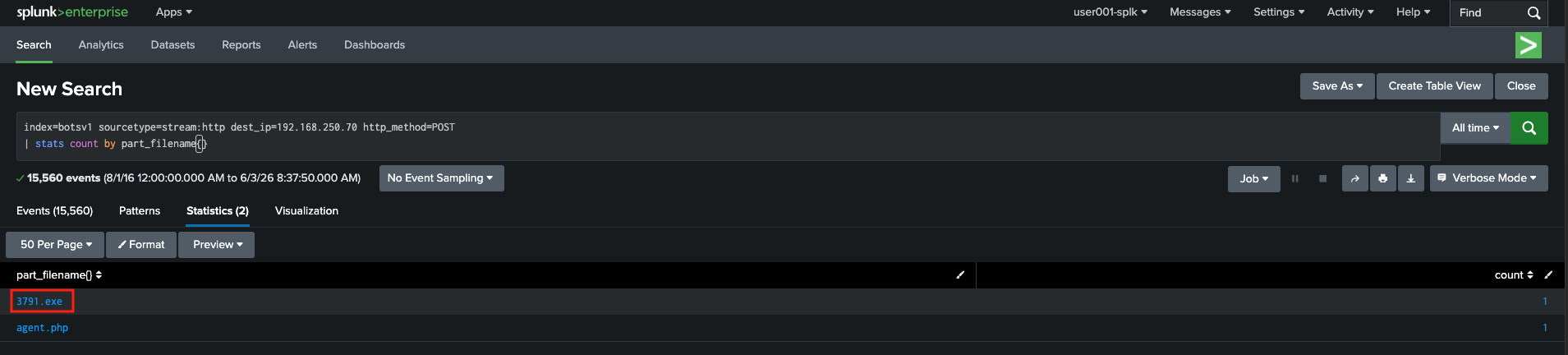
Answer: 3791.exe
Question 110: What is the MD5 hash of the executable uploaded?
Sysmon Event ID 11 wasn't showing up, so I searched for it's execution instead:
index=botsv1 sourcetype="XmlWinEventLog:Microsoft-Windows-Sysmon/Operational" EventCode=1 Image=*3791.exe
| stats count by MD5
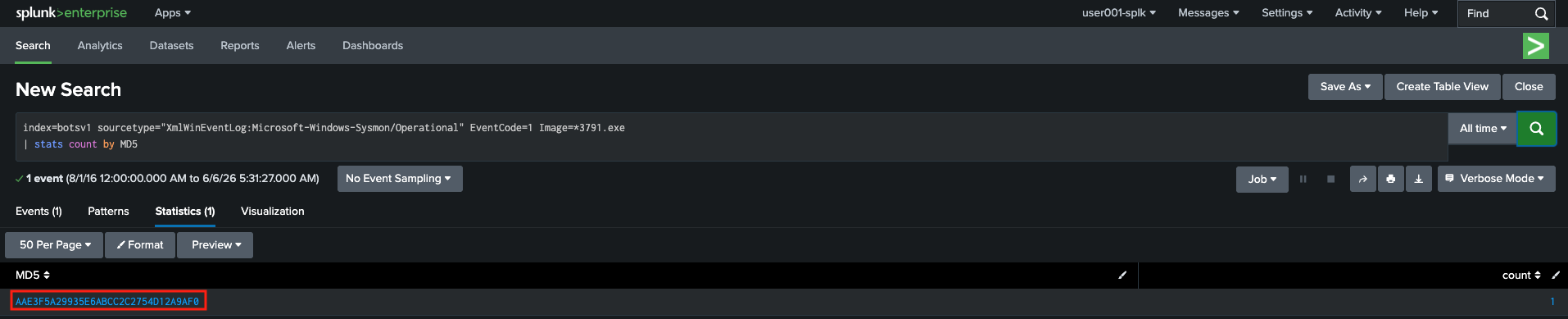
Answer: AAE3F5A29935E6ABCC2C2754D12A9AF0
Question 111: GCPD reported that common TTPs (Tactics, Techniques, Procedures) for the Po1s0n1vy APT group, if initial compromise fails, is to send a spear phishing email with custom malware attached to their intended target. This malware is usually connected to Po1s0n1vys initial attack infrastructure. Using research techniques, provide the SHA256 hash of this malware.
Knowing the attacker's IPv4 from question 106, we can search VirusTotal and click "Relations" to see related files. Looking at the first entry where the IP is found in the file contents (Files Referring), we can then collect the SHA256 hash under "Details":
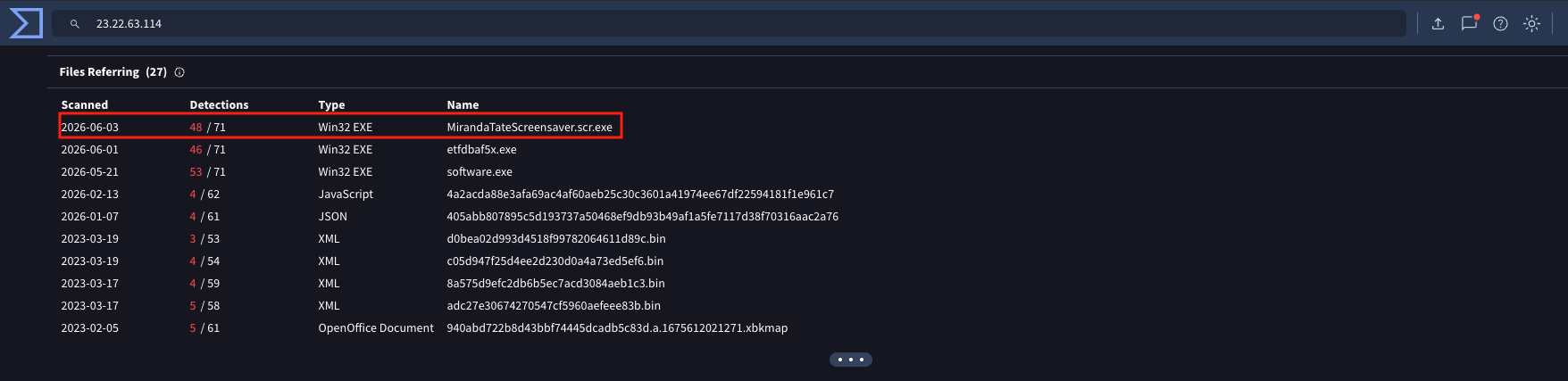
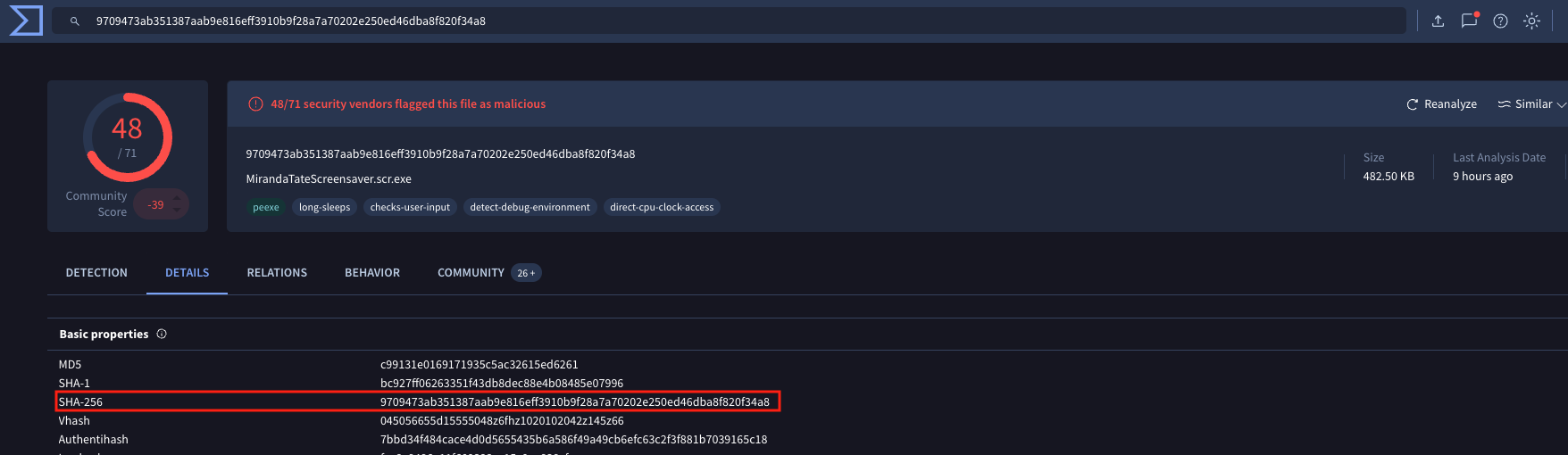
Answer: 9709473ab351387aab9e816eff3910b9f28a7a70202e250ed46dba8f820f34a8
Question 112: What special hex code is associated with the customized malware discussed in question 111?
From the VirusTotal search of the SHA256 hash in question 112, clicking on the "Community" tab and scrolling down to the first comment revels the answer:
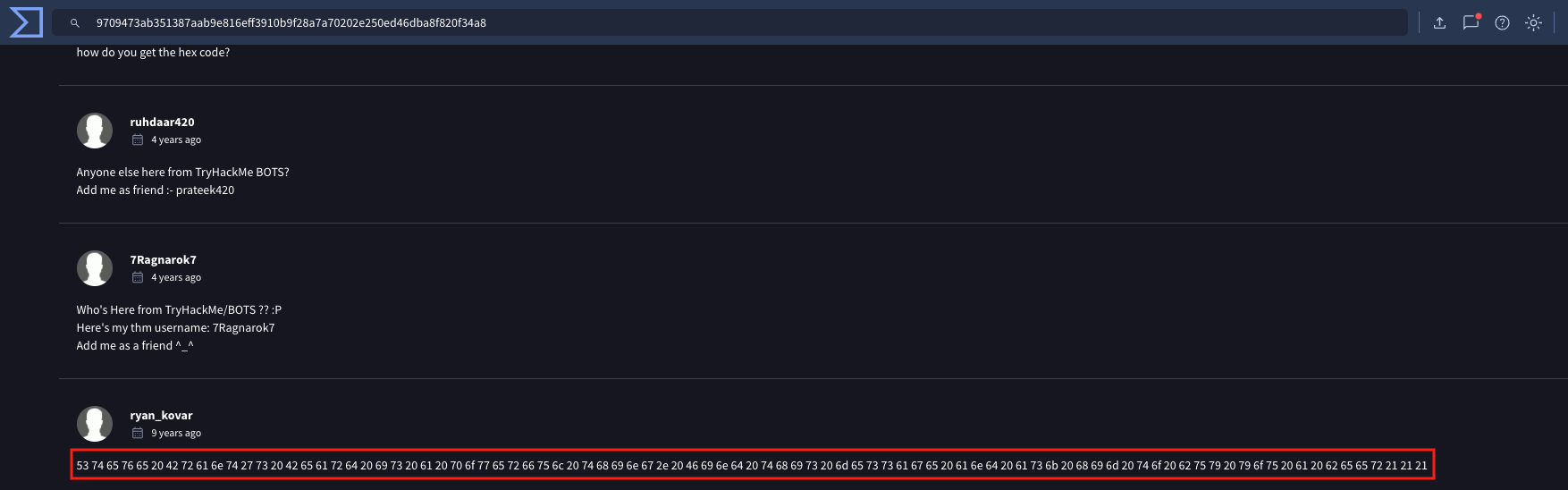
Answer: 53 74 65 76 65 20 42 72 61 6e 74 27 73 20 42 65 61 72 64 20 69 73 20 61 20 70 6f 77 65 72 66 75 6c 20 74 68 69 6e 67 2e 20 46 69 6e 64 20 74 68 69 73 20 6d 65 73 73 61 67 65 20 61 6e 64 20 61 73 6b 20 68 69 6d 20 74 6f 20 62 75 79 20 79 6f 75 20 61 20 62 65 65 72 21 21 21
Question 113: This question did not exist.
Question 114: What was the first brute force password used?
In question 108 the source IP of the brute force was found, so I modified the query from that question:
index=botsv1 sourcetype=stream:http src_ip=23.22.63.114 dest_ip=192.168.250.70 status!=404 http_method=POST url=http://imreallynotbatman.com/joomla/administrator/index.php
| table form_data, _time
| sort _time
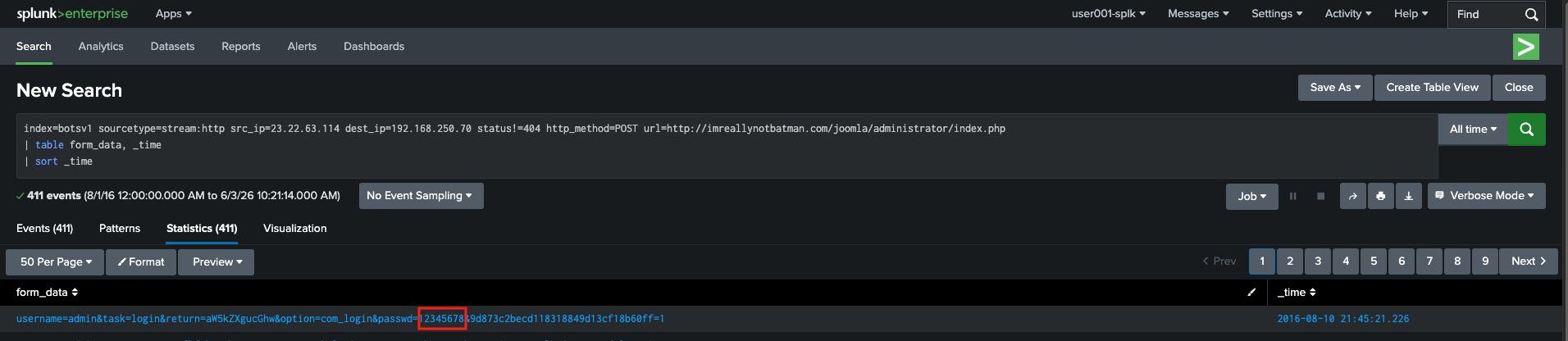
It can also be done with regex for a cleaner result (captures everything after passwd= up to the next & or end of the string):
index=botsv1 sourcetype=stream:http src_ip=23.22.63.114 dest_ip=192.168.250.70 status!=404 http_method=POST url=http://imreallynotbatman.com/joomla/administrator/index.php
| rex field=form_data "passwd=(?<password>[^&]+)"
| table password, _time
| sort _time
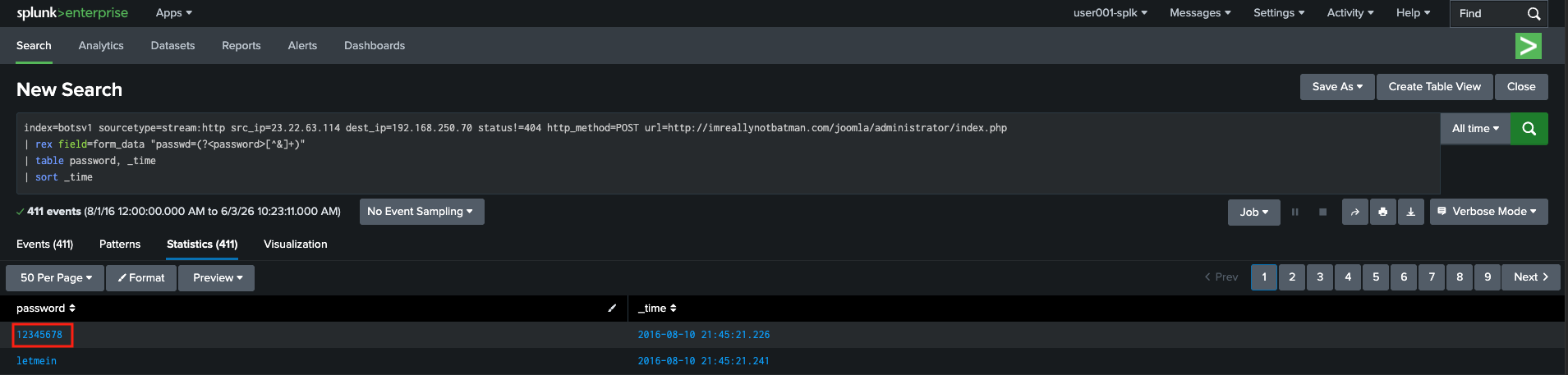
Answer: 12345678
Question 115: One of the passwords in the brute force attack is James Brodsky's favorite Coldplay song. We are looking for a six character word on this one. Which is it?
I reused the first query, but added | where len(password)=6. Scrolling down to find the answer.
index=botsv1 sourcetype=stream:http src_ip=23.22.63.114 dest_ip=192.168.250.70 status!=404 http_method=POST url=http://imreallynotbatman.com/joomla/administrator/index.php
| rex field=form_data "passwd=(?<password>[^&]+)"
| where len(password)=6
| table password, _time
| sort _time
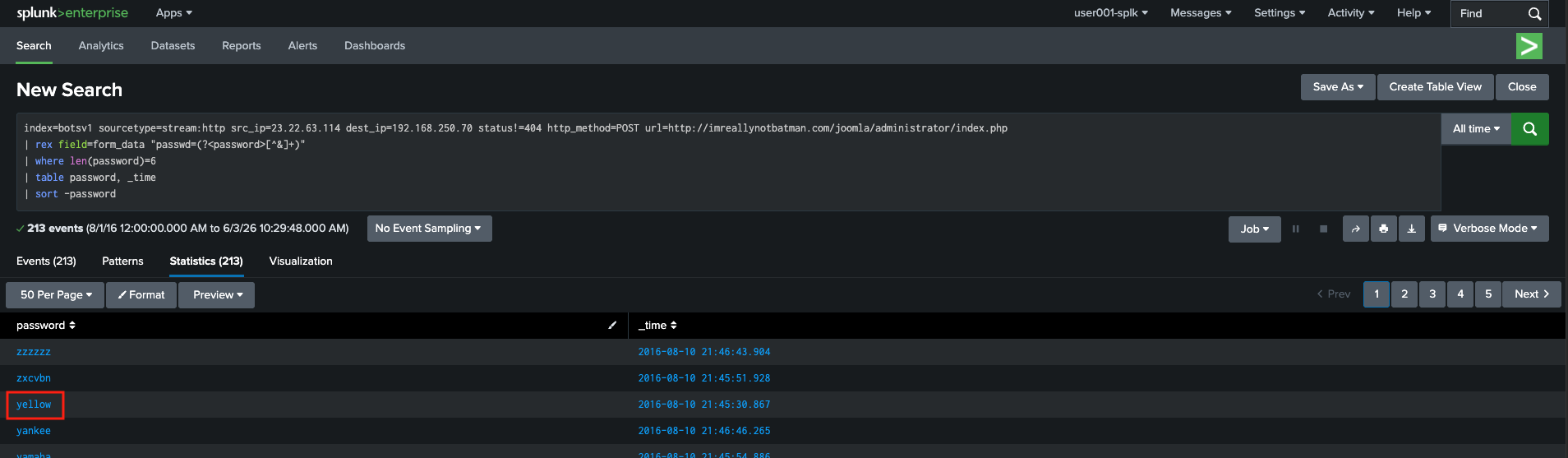
(Note: in the screenshot I replaced the last line with | sort -password, just to show the result more clearly).
Answer: yellow
Question 116: What was the correct password for admin access to the content management system running "imreallynotbatman.com"?
Using the query from question 114, I modified to exclude login attempts from the malicious IP. This showed one, genuine login:
index=botsv1 sourcetype=stream:http src_ip!=23.22.63.114 dest_ip=192.168.250.70 status!=404 http_method=POST url=http://imreallynotbatman.com/joomla/administrator/index.php
| rex field=form_data "passwd=(?<password>[^&]+)"
| where len(password)=6
| table password, _time
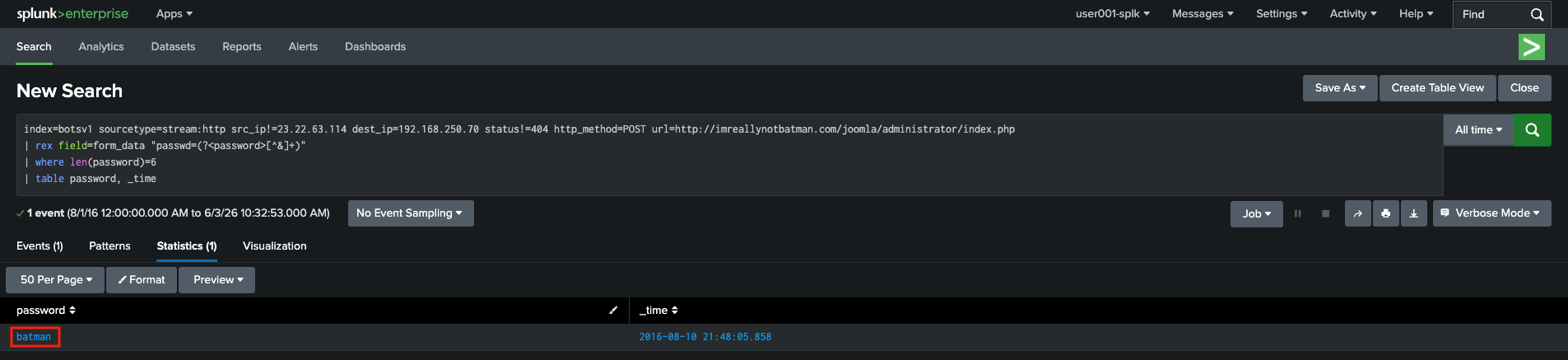
Answer: batman
Question 117: What was the average password length used in the password brute forcing attempt?
Using the query from question 114 again, I used | eval password_len=len(password) to create a new field for the length of each password, then | stats avg(password_len) as avg_length to find the average.
index=botsv1 sourcetype=stream:http src_ip=23.22.63.114 dest_ip=192.168.250.70 http_method=POST url=http://imreallynotbatman.com/joomla/administrator/index.php
| rex field=form_data "passwd=(?<password>[^&]+)"
| eval password_len=len(password)
| stats avg(password_len) as avg_length
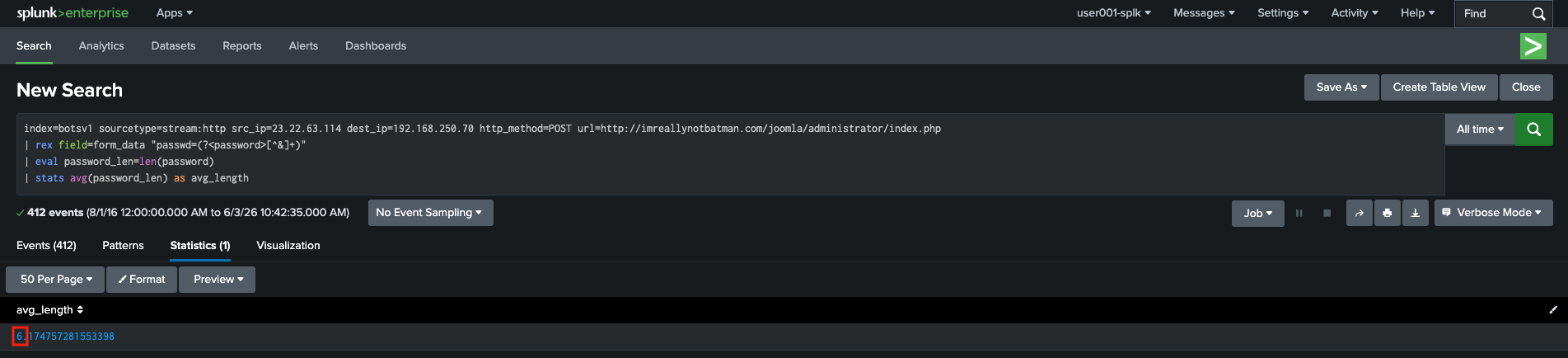
Answer: 6
Question 118: How many seconds elapsed between the time the brute force password scan identified the correct password and the compromised login?
From previous questions the correct password (batman) is known, so I made a query that only shows events against the web server where this password was entered:
index=botsv1 sourcetype=stream:http dest_ip=192.168.250.70 http_method=POST url=http://imreallynotbatman.com/joomla/administrator/index.php
| rex field=form_data "passwd=(?<password>[^&]+)"
| where password="batman"
| table password, _time
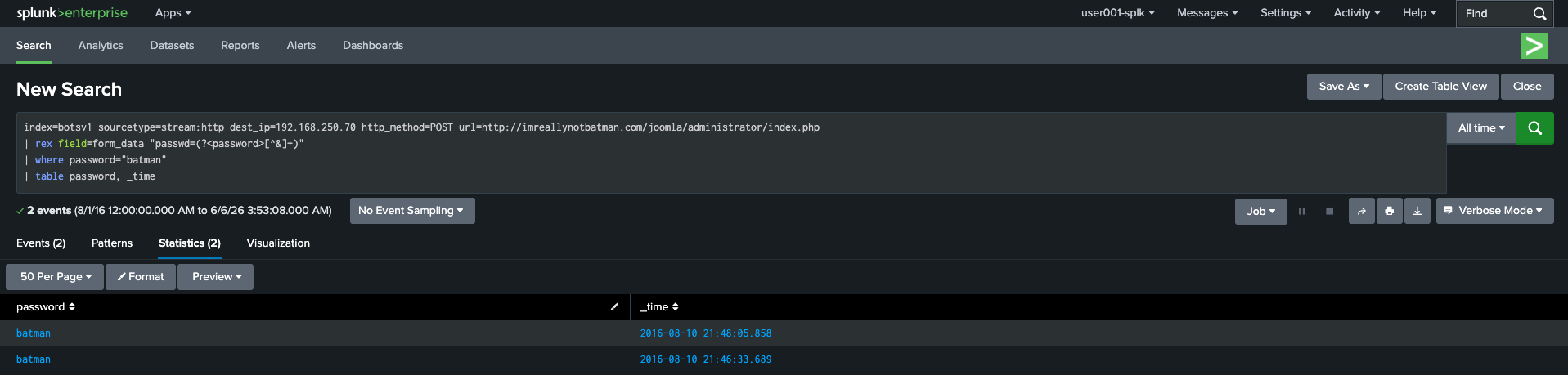
There where only 2 events, so I used | stats range(_time) as elapsed to get their difference:
index=botsv1 sourcetype=stream:http dest_ip=192.168.250.70 http_method=POST url=http://imreallynotbatman.com/joomla/administrator/index.php
| rex field=form_data "passwd=(?<password>[^&]+)"
| where password="batman"
| stats range(_time) as elapsed
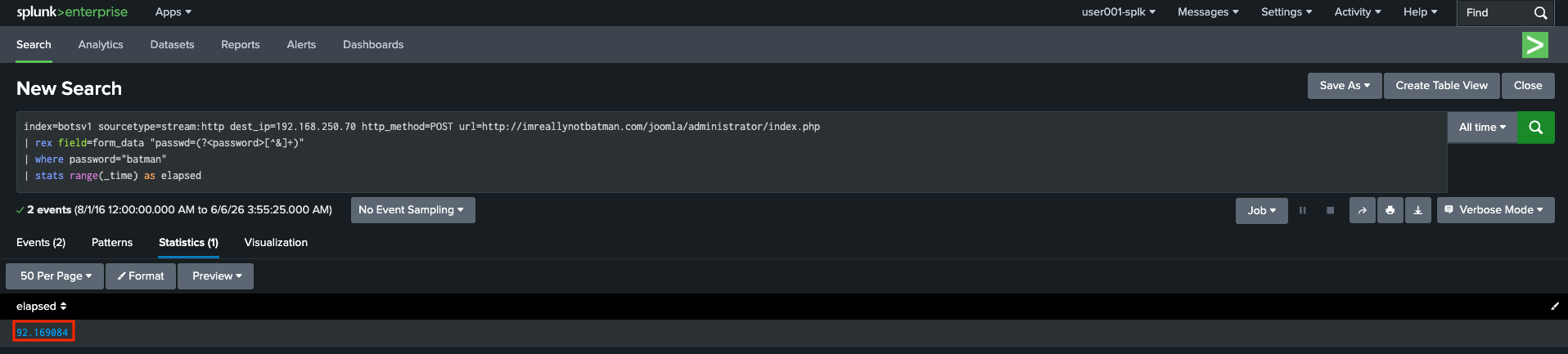
Answer: 92.17
Question 119: How many unique passwords were attempted in the brute force attempt?
I used my query from question 117, though I replaced the last 2 lines with | stats dc(password) as unique_passwords:
index=botsv1 sourcetype=stream:http src_ip=23.22.63.114 dest_ip=192.168.250.70 http_method=POST url=http://imreallynotbatman.com/joomla/administrator/index.php
| rex field=form_data "passwd=(?<password>[^&]+)"
| stats dc(password) as unique_passwords
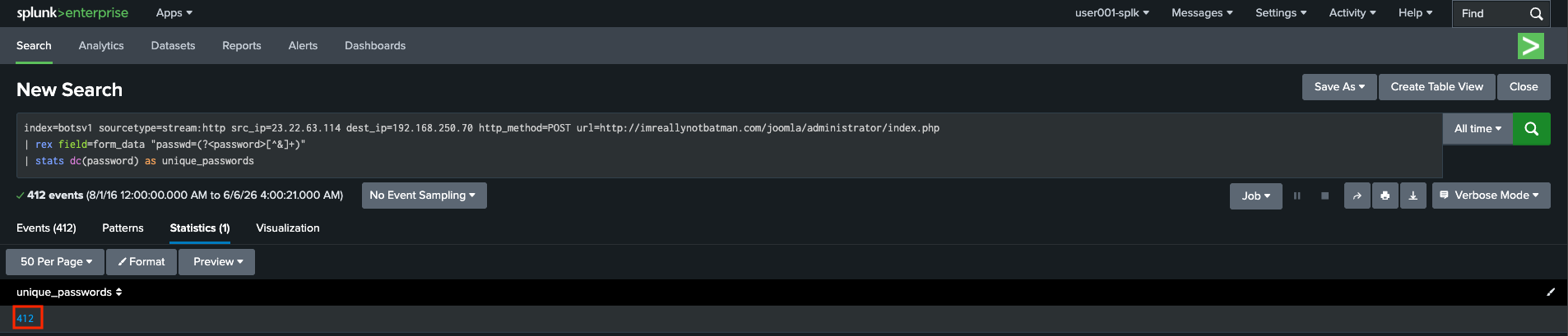
Answer: 412
Scenario 2 - Ransomware:
After the excitement of yesterday, Alice has started to settle into her new job. Sadly, she realizes her new colleagues may not be the crack cybersecurity team that she was led to believe before she joined. Looking through her incident ticketing queue she notices a “critical” ticket that was never addressed. Shaking her head, she begins to investigate. Apparently on August 24th Bob Smith (using a Windows 10 workstation named we8105desk) came back to his desk after working-out and found his speakers blaring (click below to listen), his desktop image changed (see below) and his files inaccessible.
Alice has seen this before... ransomware. After a quick conversation with Bob, Alice determines that Bob found a USB drive in the parking lot earlier in the day, plugged it into his desktop, and opened up a word document on the USB drive called "Miranda_Tate_unveiled.dotm". With a resigned sigh she begins to dig into the problem...
Question 200: What was the most likely IPv4 address of we8105desk on 24AUG2016?
Setting the date range to only Aug 24 2016, the hostname as we8105desk and the event ID as 3 (Sysmon network connection detected) gives the answer:
index=botsv1 host=we8105desk EventID=3
| top src_ip
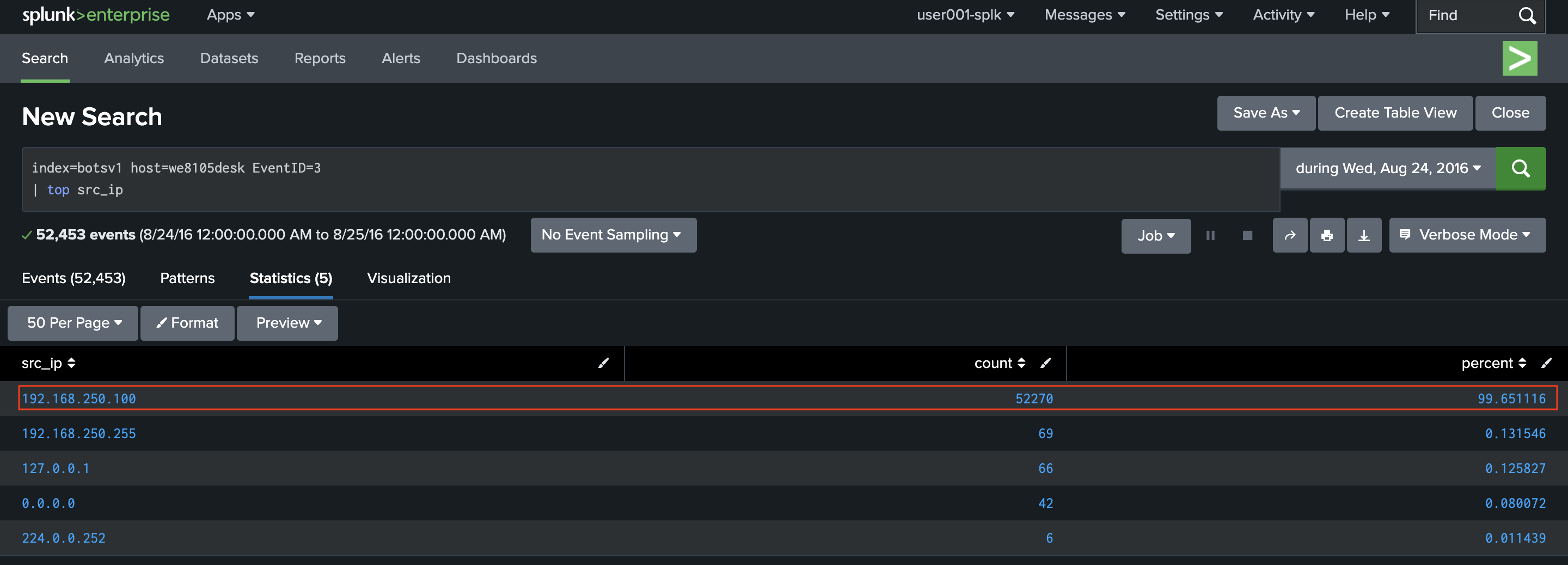
Answer: 192.168.250.100
Question 201: Amongst the Suricata signatures that detected the Cerber malware, which one alerted the fewest number of times? Submit ONLY the signature ID value as the answer.
Following the instructions in the question I set the sourcetype as suricata, where Cerber exists somewhere in the signature, and the event is an alert. The answer was then the signature ID which appeared the least (once):
index=botsv1 sourcetype=suricata event_type=alert signature=*Cerber*
| stats count by alert.signature_id
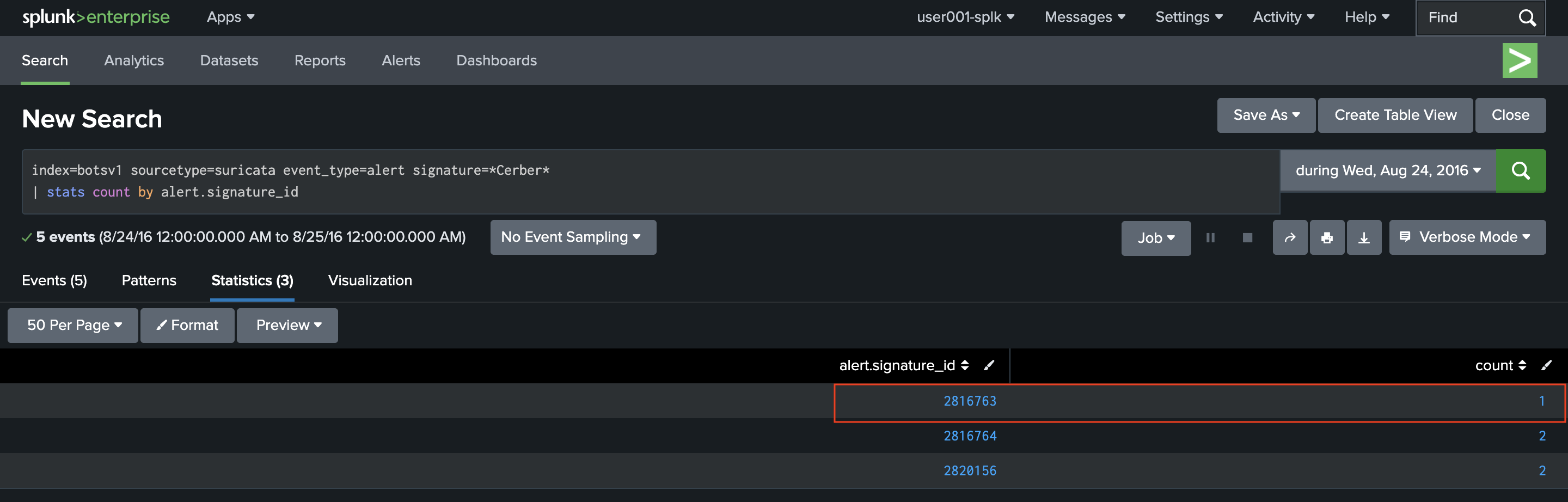
Answer: 2816763
Question 202: What fully qualified domain name (FQDN) does the Cerber ransomware attempt to direct the user to at the end of its encryption phase?
I took a look at the unique DNS requests from the known source IP (compromised host) on the known date of activity. I excluded *.arpa to remove a lot of the noise:
index=botsv1 sourcetype=suricata src_ip=192.168.250.100 event_type=dns dns.rrname!=*.arpa
| stats count by dns.rrname
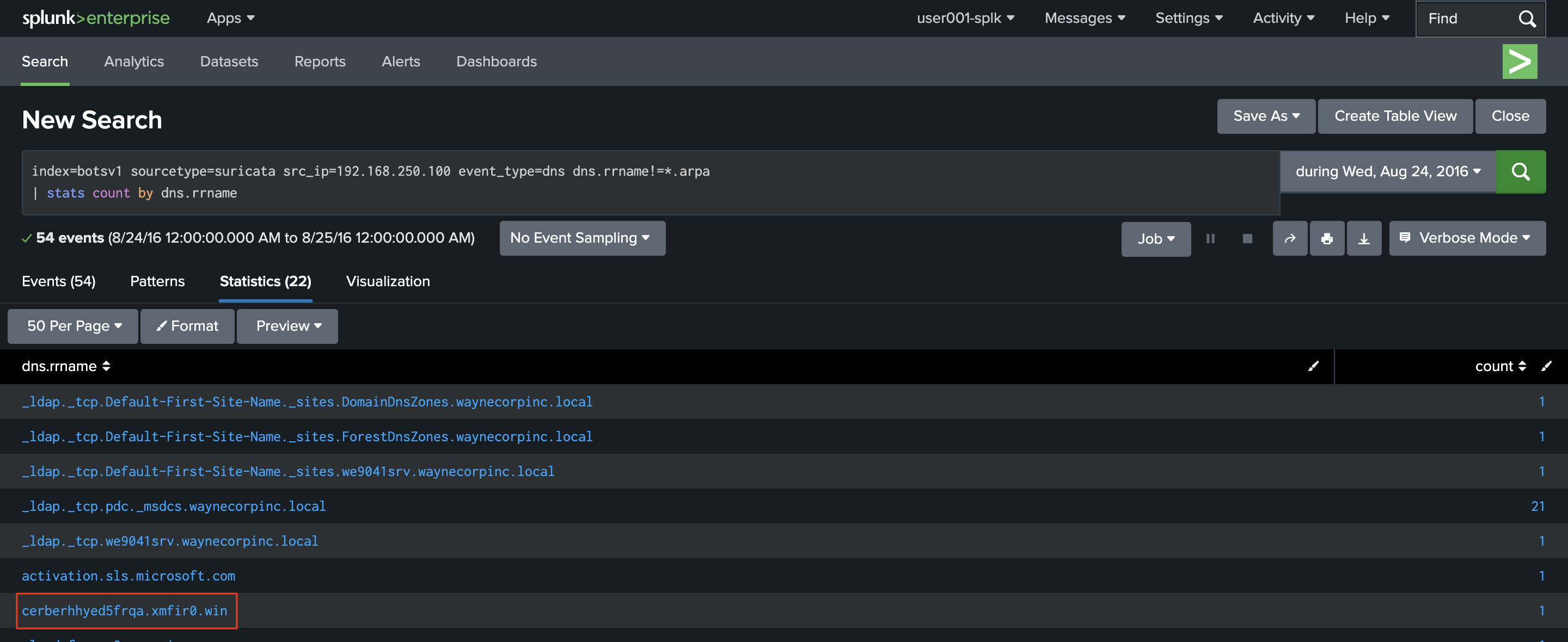
There where 22 unique results, and a quick VirusTotal search for one interesting looking domain showed 10 security vendors flagging it as malicious.
Answer: cerberhhyed5frqa.xmfir0.win
Question 203: What was the first suspicious domain visited by we8105desk on 24AUG2016?
Sorting the same query as the above by time and displaying it (and excluding *.local to further reduce noise) shows the answer:
index=botsv1 sourcetype=suricata src_ip=192.168.250.100 event_type=dns dns.rrname!=*.arpa dns.rrname!=*.local
| stats count by dns.rrname, _time
| sort by _time
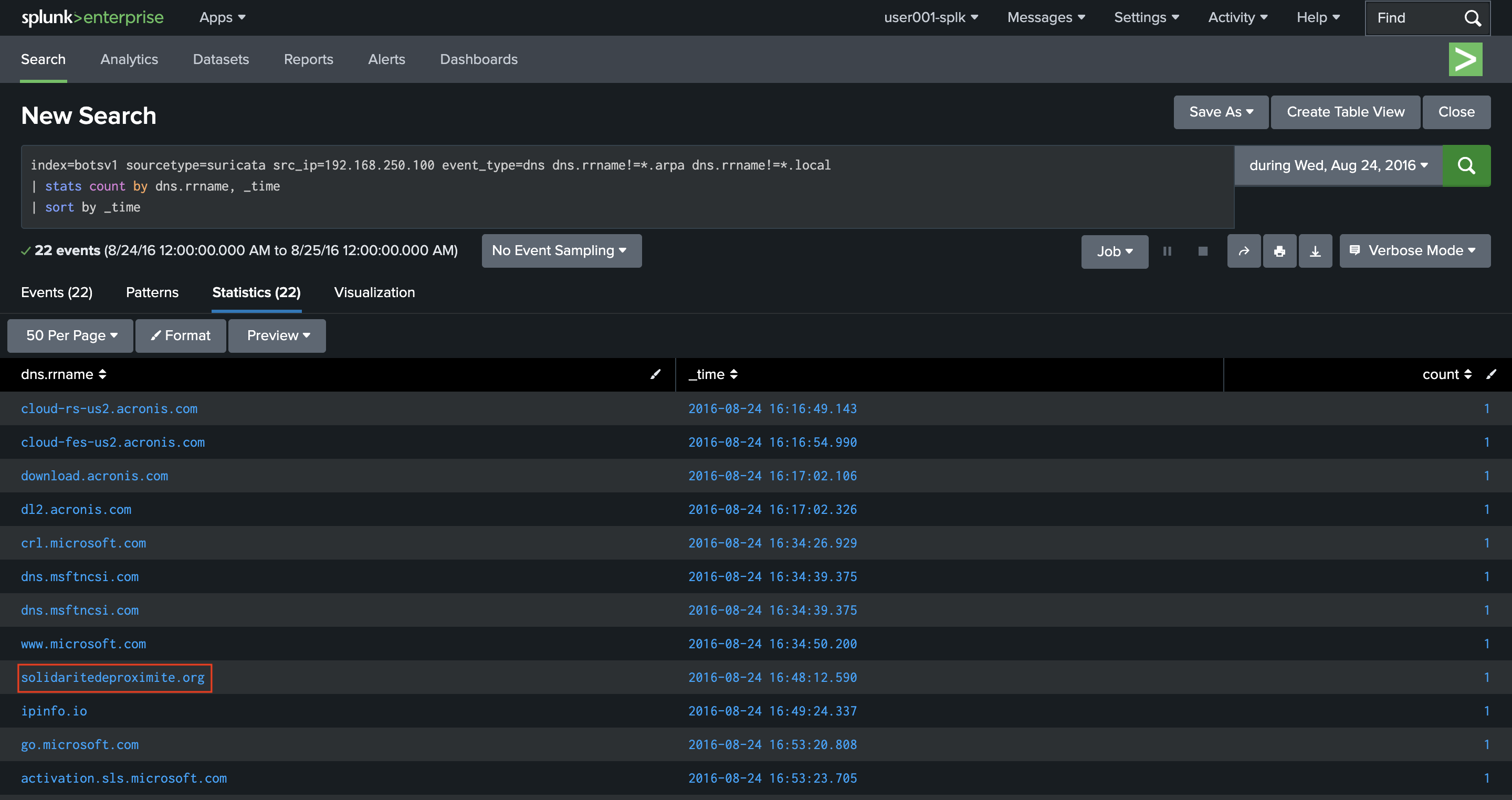
Answer: solidaritedeproximite.org
Question 204: During the initial Cerber infection a VB script is run. The entire script from this execution, pre-pended by the name of the launching .exe, can be found in a field in Splunk. What is the length of the value of this field?
I did a wide search for .vbs for the host in question (on the day of the event). The search was fast and came back with only 10 results, so I created a table to show each CommandLine and it's length to get the answer:
index=botsv1 host=we8105desk .vbs
| eval length = len(CommandLine)
| table CommandLine, length
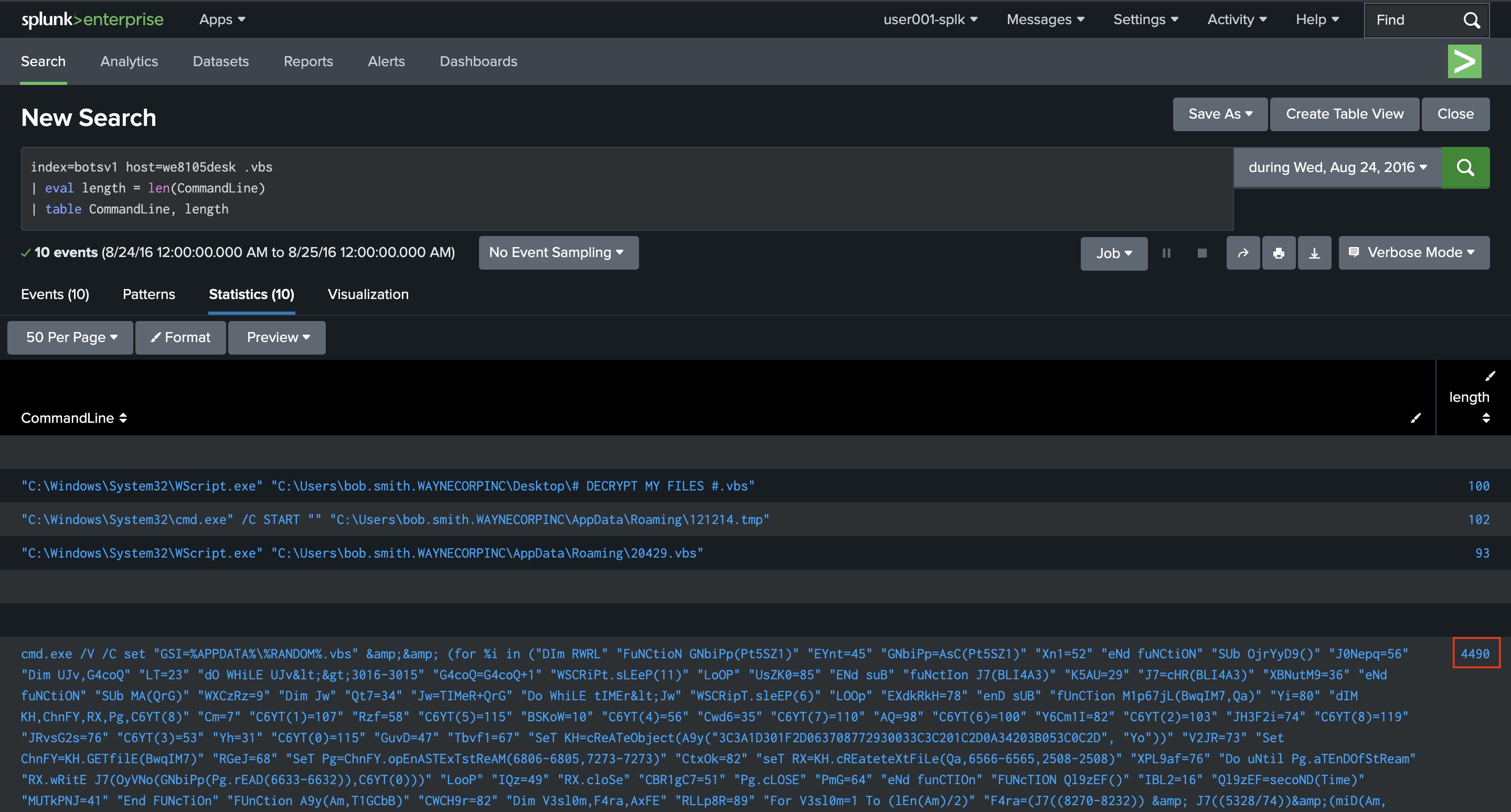
Answer: 4490
Question 205: What is the name of the USB key inserted by Bob Smith?
The hint of this questions says to review community.splunk.com so I did a Google search for site:community.splunk.com USB key name. The second result brought me to this Splunk community page which had the query needed to solve the challenge (the first reply). Though I then found a much simpler query on This Splunk Lantern Page which gives a cleaner answer (I modified it slightly below):
index=botsv1 sourcetype=winregistry host=we8105desk friendlyname
 | stats count by registry_value_data
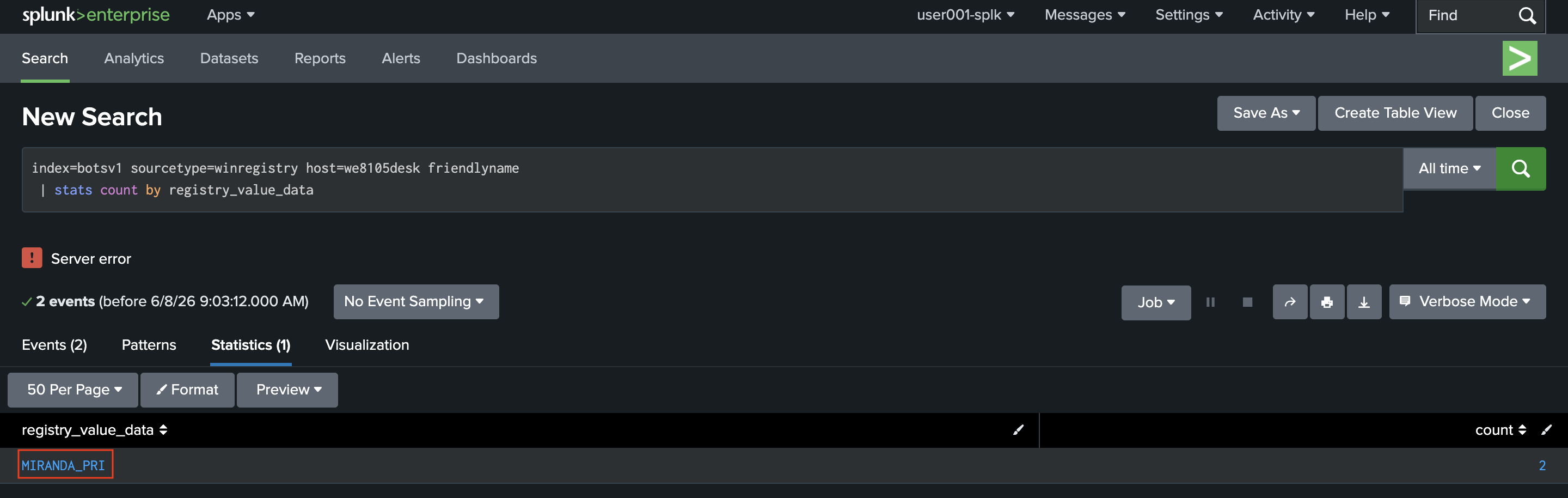
Answer: MIRANDA_PRI
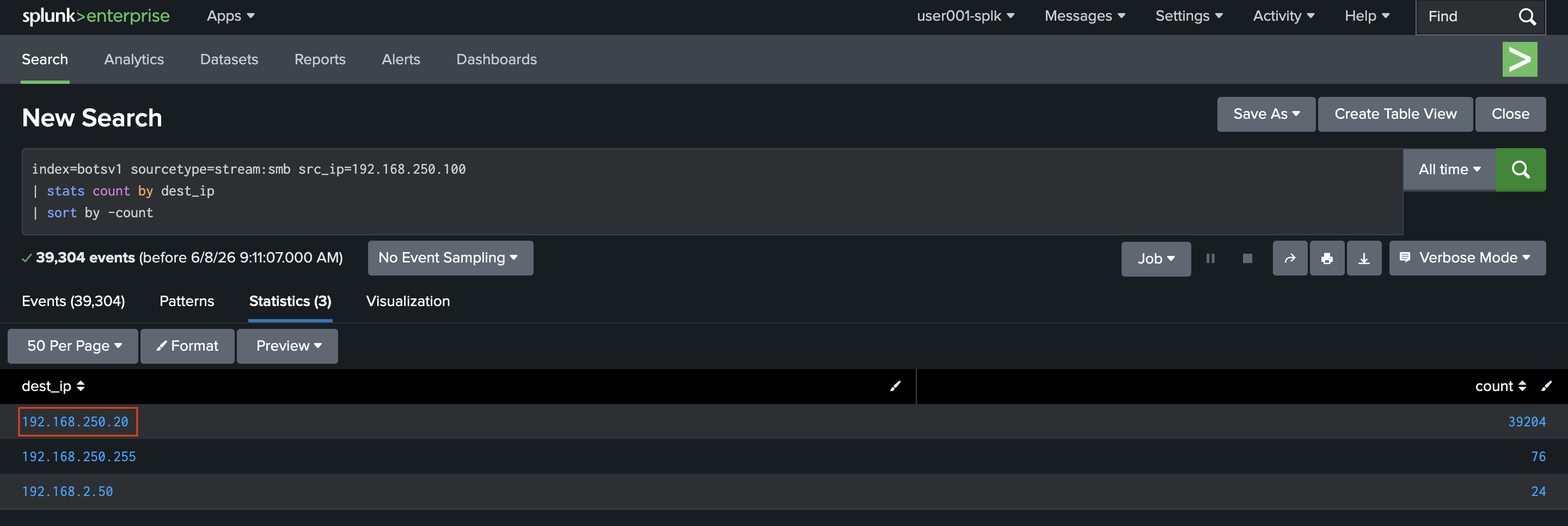
Question 206: Bob Smith's workstation (we8105desk) was connected to a file server during the ransomware outbreak. What is the IPv4 address of the file server?
Since the question is about a file server, I looked at SMB events from the host and picked the destination with significantly higher events:
index=botsv1 sourcetype=stream:smb src_ip=192.168.250.100
| stats count by dest_ip
| sort by -count
I also validated this by filtering again by destination port 445 (SMB), which gave only the one same result:
index=botsv1 sourcetype=stream:smb src_ip=192.168.250.100 dest_port=445
| stats count by dest_ip
| sort by -count
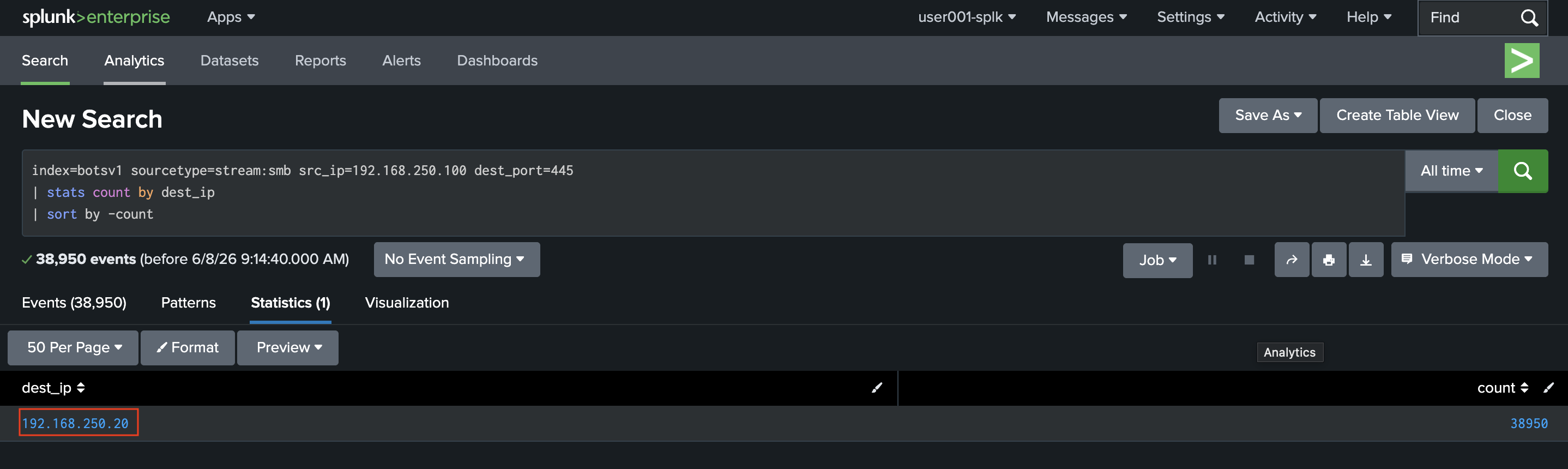
Answer: 192.168.250.20
Question 207: How many distinct PDFs did the ransomware encrypt on the remote file server?
I used the event code 5145 (A network share object was checked to see whether client can be granted desired access), mostly because the other codes where not populating. I set the source IP, username and where the target file ends with .PDF:
index=botsv1 EventCode=5145 Source_Address=192.168.250.100 member_dn="bob.smith" Relative_Target_Name=*.pdf
| stats count by Relative_Target_Name
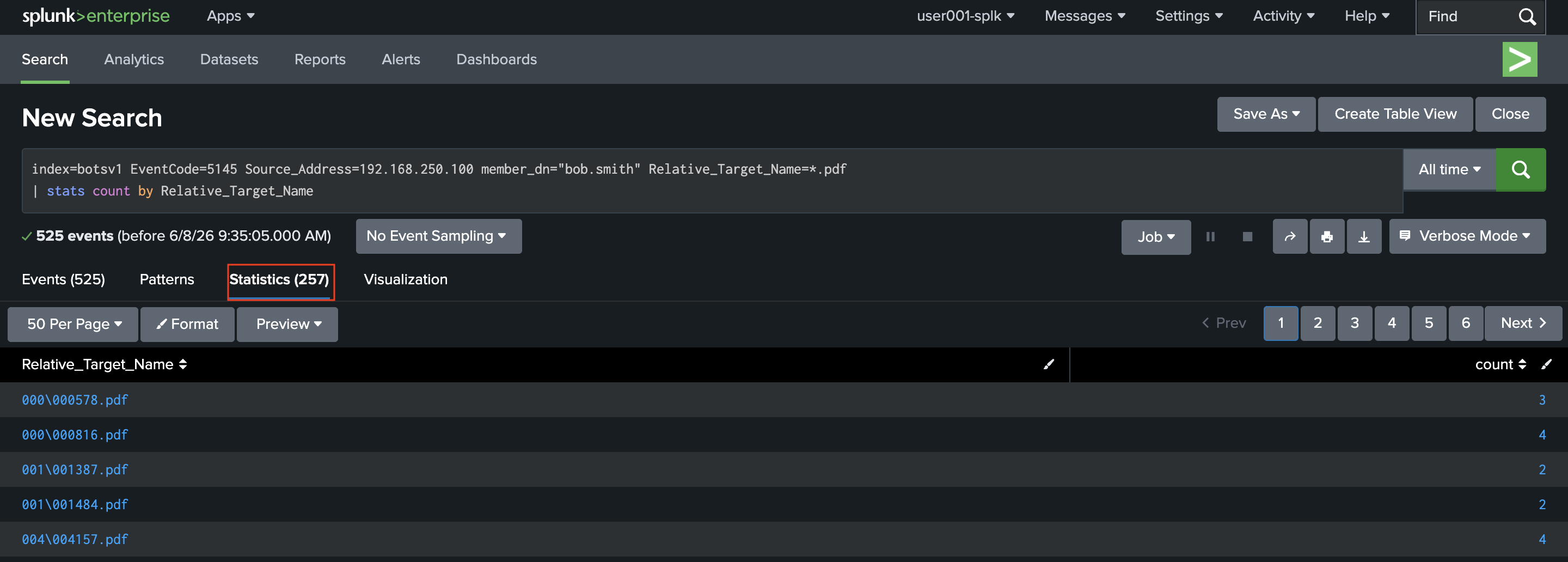
The above shows there where 257 unique file names ending with .pdf.
Answer: 257
Question 208: The VBscript found in question 204 launches 121214.tmp. What is the ParentProcessId of this initial launch?
I know the source VBScript and the file which it launches, so event ID 1 will show it's parent process ID:
index=botsv1 host=we8105desk EventID=1 ParentCommandLine=*20429.vbs\" CommandLine=*121214.tmp\"
| table ParentCommandLine CommandLine ParentProcessId
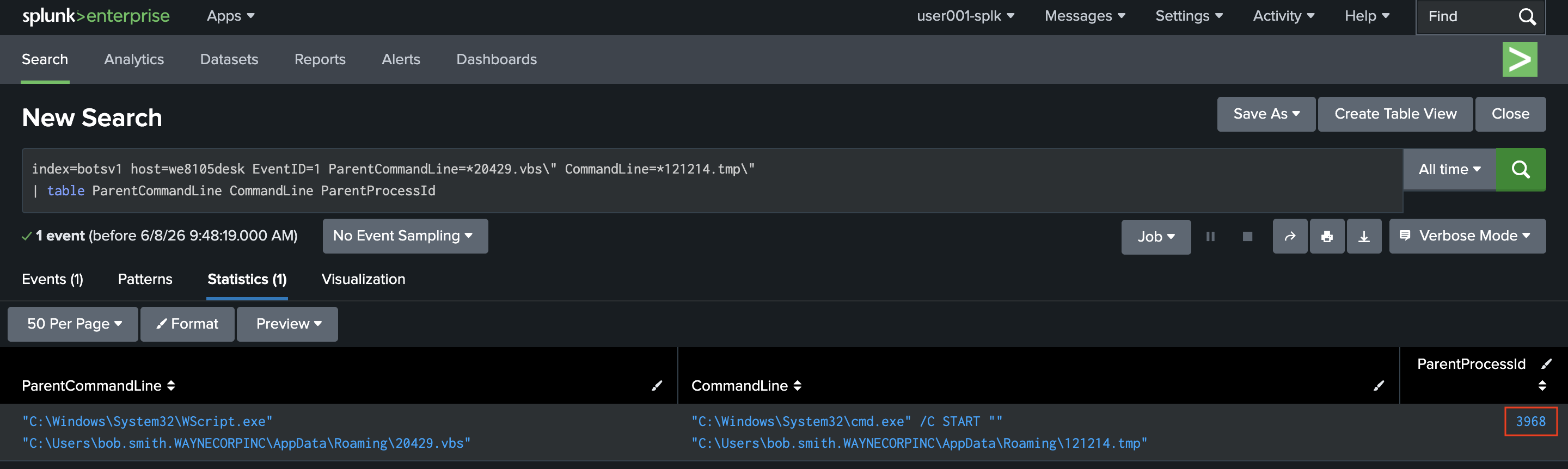
Answer: 3968
Question 209: The Cerber ransomware encrypts files located in Bob Smith's Windows profile. How many .txt files does it encrypt?
The encryption process triggers event ID 2 (because it modifies the file's creation timestamp during encryption), so using this ID and filtering down to Bob's user folder and .txt files:
index=botsv1 host=we8105desk EventID=2 file_path="C:\\Users\\bob.smith*" file_path="*.txt"
| stats count by file_path
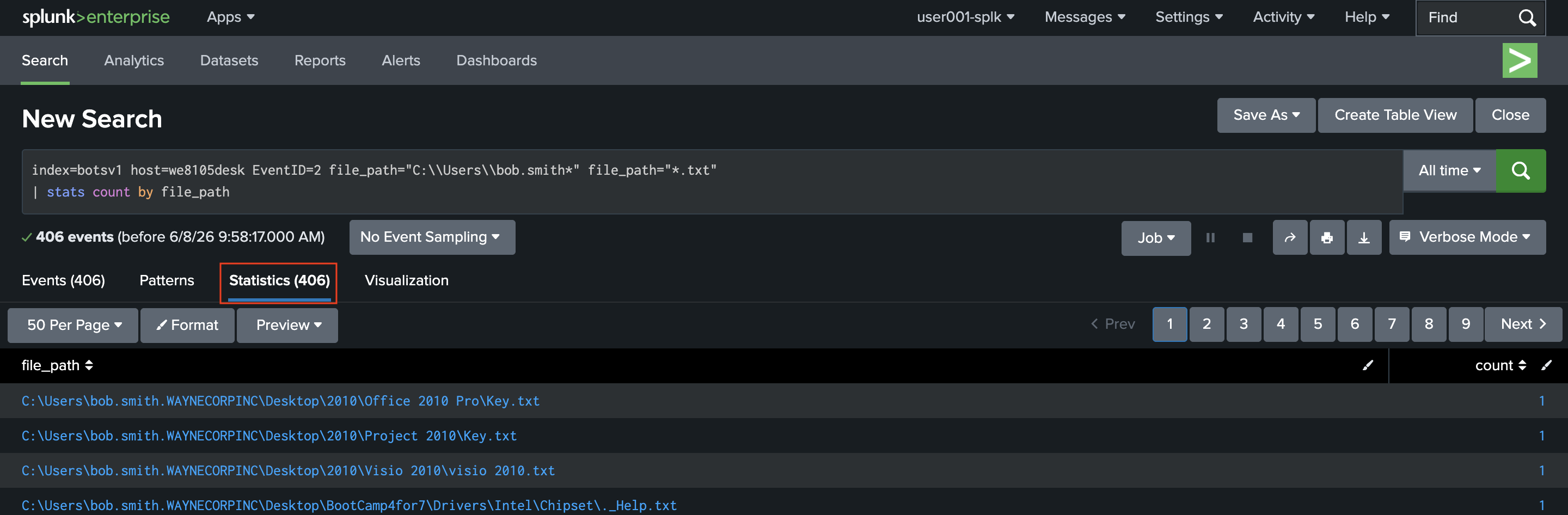
Answer: 406
Question 110: The malware downloads a file that contains the Cerber ransomware cryptor code. What is the name of that file?
In question 203, I was already looking at suspicious domains and had found solidaritedeproximite.org. So I wanted to look into those requests:
index=botsv1 sourcetype=suricata src_ip=192.168.250.100 http.hostname=solidaritedeproximite.org event_type=http
| stats count by http.url
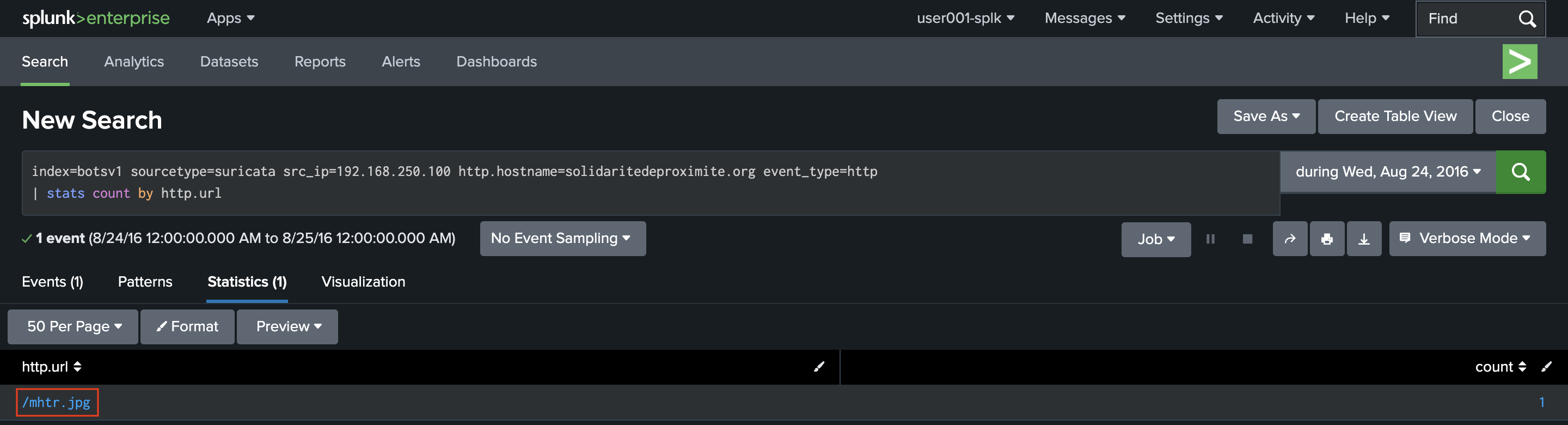
A lazy search for the file hash reveals it:
index=botsv1 filename=mhtr.jpg
| table file_hash
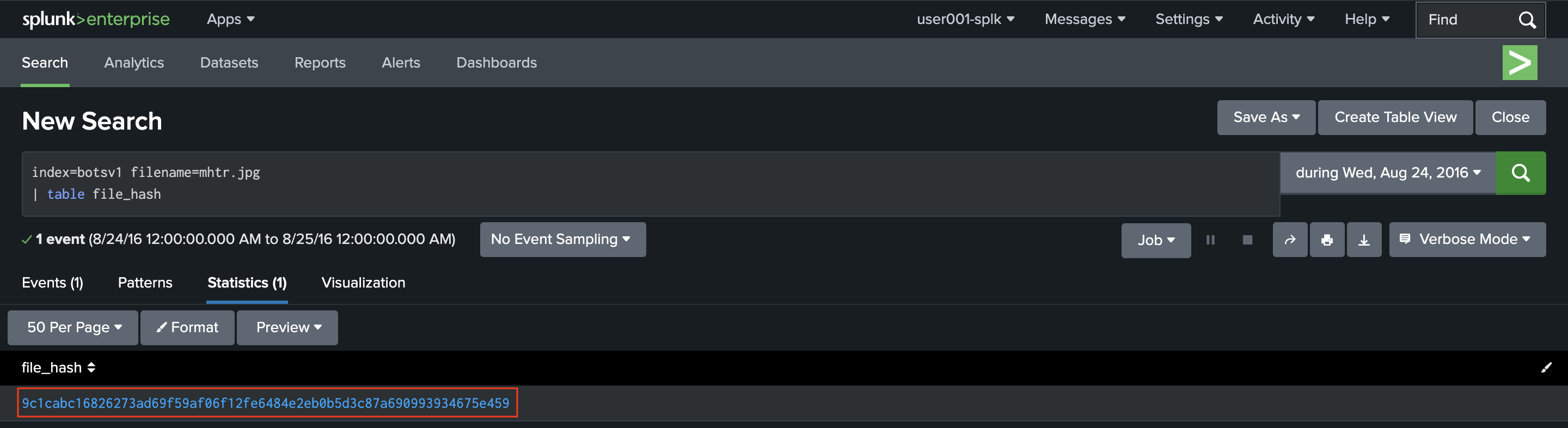
And then a VirusTotal search has 28 vendors flagging it as malicious.
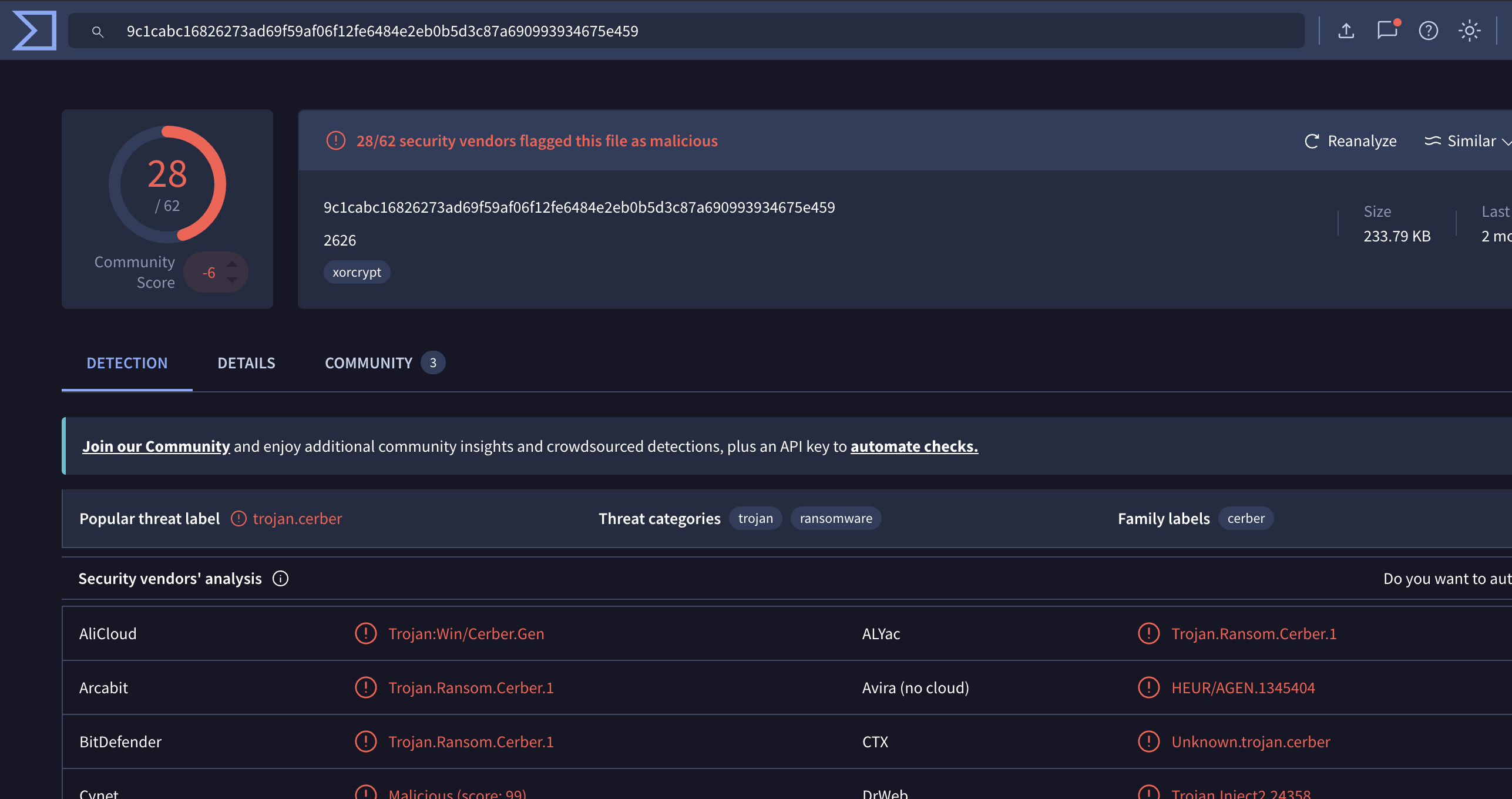
Answer: mhtr.jpg
Question 211: Now that you know the name of the ransomware's encryptor file, what obfuscation technique does it likely use?
A simple Google search for the malware reveals the answer:
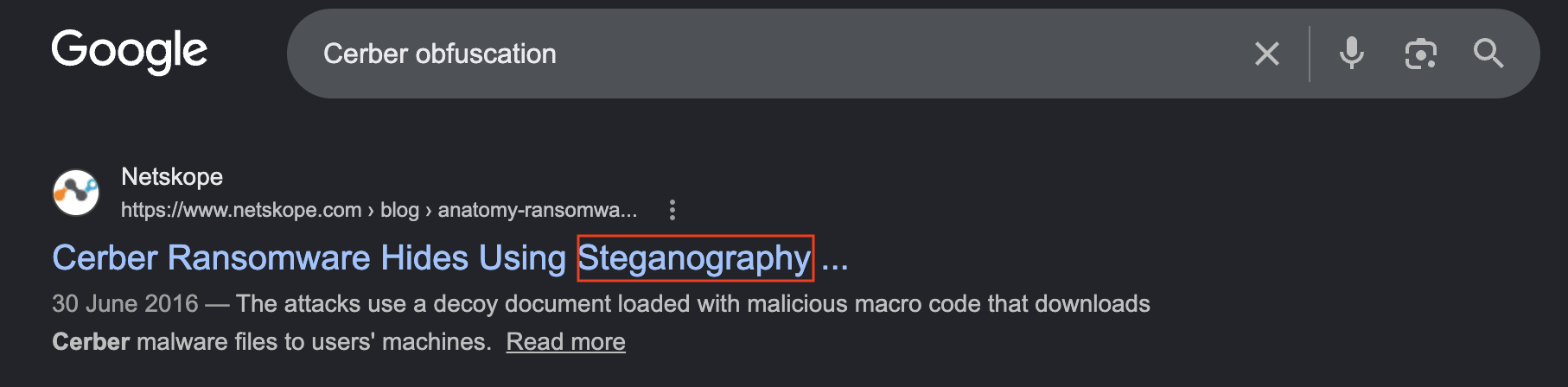
Answer: Steganography